What is DePIN? The Definitive 2026 Guide to Web3 Infrastructure (2,500+ Words)

You have likely heard of Bitcoin mining. You imagine a humid warehouse full of humming supercomputers, a $5,000 monthly electric bill, and a requirement for a PhD in coding just to turn it on. For a long time, that was the only way to earn crypto.
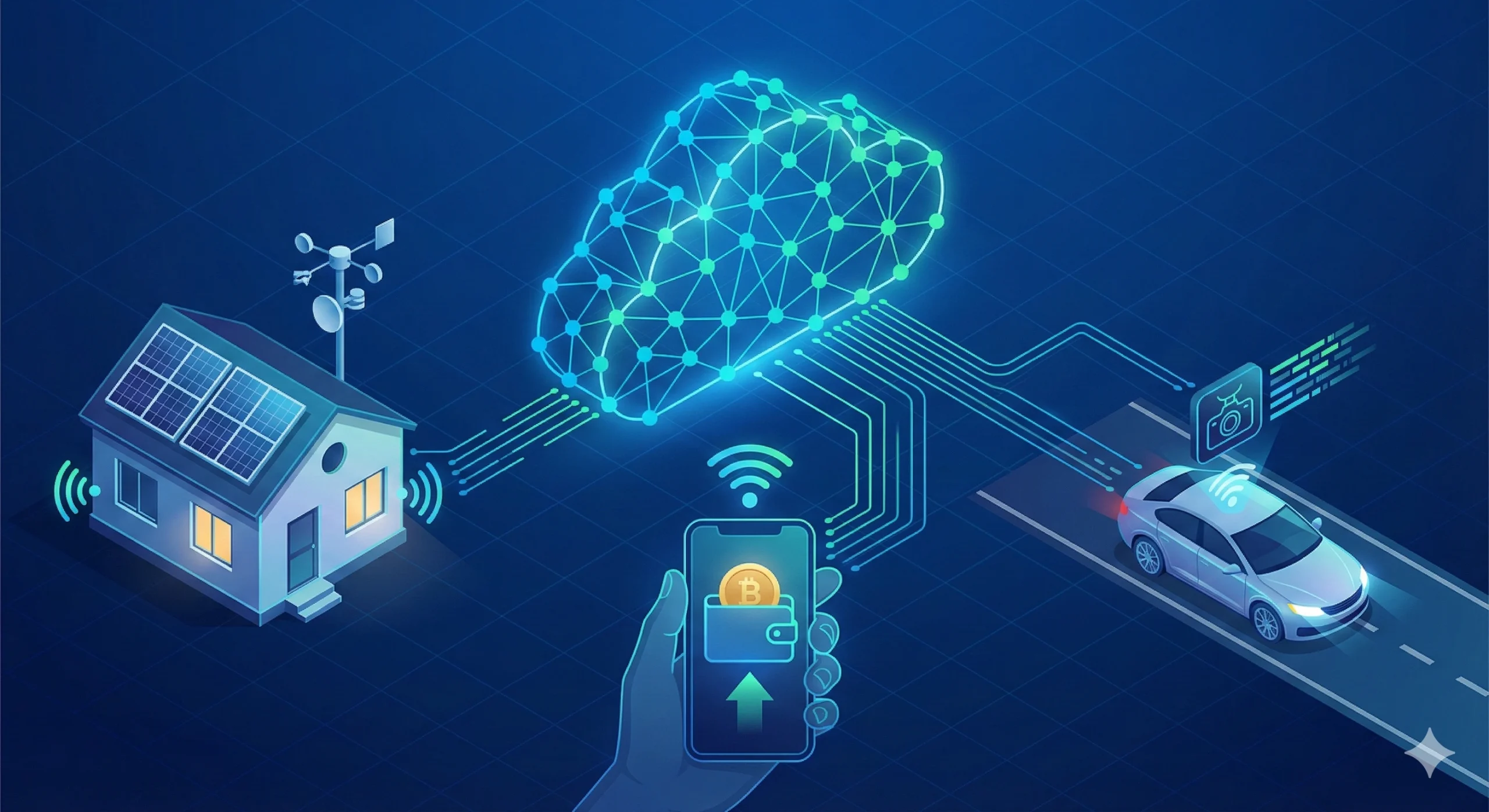
But in 2026, the game has changed. A new sector called DePIN (Decentralized Physical Infrastructure Networks) has emerged, and it allows you to earn passive income using simple, everyday devices. It doesn’t care about your graphics card; it cares about your WiFi, your car, and even the weather outside your window. If you can plug in a toaster, you can participate in DePIN.
This guide is your zero-to-hero roadmap to understanding how it works, if it is safe, and which device you should buy.
The “Uber” Analogy: Why This Exists
To understand DePIN, we first need to look at Uber. Uber is the largest taxi company in the world, yet they own zero cars. You own the car, you pay for the gas, and you do the driving. But at the end of the ride, Uber takes a massive 40% cut of your earnings just for providing the app.
DePIN flips this model upside down. Imagine if you could drive for a mapping service, but instead of a CEO in Silicon Valley taking the profit, the software was automated and you kept 100% of the value.
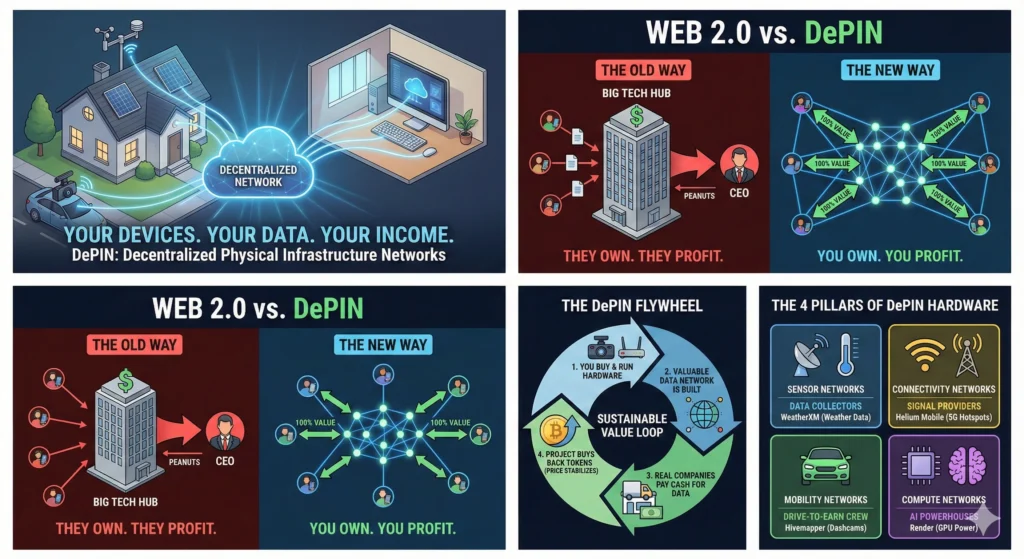
In the old “Big Tech” model, corporations build the network (cell towers, servers), own the data, and keep the money. In the DePIN model, you build the network by buying a device, you own the data, and you get paid directly in tokens. It is a way for regular people to crowd-source massive real-world infrastructure—like maps, weather stations, and WiFi networks—and capture the value they create.
The Flywheel: Where Does the Money Come From?
The #1 question beginners ask is: “This sounds like magic money. Who is paying me?” It is not magic; it is a business model called the DePIN Flywheel.
Take a project like Hivemapper (Dashcams) as an example. First, the project needs a map of the world but cannot afford to hire 10,000 drivers, so they offer tokens to anyone who buys a dashcam and maps their city. As you and thousands of others start driving, the network grows from one city to 100 cities.
Once the map is comprehensive, it becomes valuable. Logistics companies like FedEx or Uber pay real cash to access this fresh map data because it is often cheaper and fresher than Google Maps. The project then uses that cash to buy back tokens from the market, stabilizing the price and paying you. You are not just “mining”; you are a freelance contractor building a valuable digital asset.
The 4 Pillars of DePIN Hardware
In 2026, DePIN has expanded beyond just “WiFi.” There are now four distinct categories, and you need to pick the one that fits your resources.
1. Sensor Networks (The “Data” Collectors)
These devices sit still and watch the world. The best example is WeatherXM. You bolt a small weather station to your roof or balcony to measure rain, wind, and humidity. The data is purchased by farmers, insurance companies, and hedge funds who need hyper-local weather accuracy to make financial decisions.
2. Connectivity Networks (The “Signal” Providers)
These devices provide internet coverage. Helium Mobile is the leader here; you set up a small “Hotspot” in your house or coffee shop that broadcasts a 5G signal. You get paid whenever cell phone users connect to your signal for cheaper data plans.
3. Mobility Networks (The “Drive-to-Earn” Crew)
These devices move with you. Projects like Hivemapper or DIMO use a device plugged into your car. As you drive to work, it maps the road or monitors your car’s health. The end-users for this data are map companies and car manufacturers.
4. Compute Networks (The “AI” Powerhouses)
This is the hottest trend of 2026. Platforms like Render or IO.net allow you to connect your gaming PC’s graphics card (GPU) to the network. AI startups then pay to use your computer’s power to train Artificial Intelligence models because it is cheaper than renting servers from Amazon AWS.
Which Device Fits Your Lifestyle?
Don’t buy a device just because it pays well. Buy one that fits your living situation, or you will fail.
- The Homeowner: If you have a roof and a backyard in the suburbs, your best bet is WeatherXM or Geodnet. These devices require a clear view of the sky to work effectively. You should generally avoid 5G Hotspots in the suburbs unless you live near a busy gathering place, as the signal won’t get used enough to earn high rewards.
- The Apartment Dweller: If you live in a dense city but have no roof access, look at a Helium Mobile Hotspot. Put it in your window facing the street to catch the phones of people walking by.
- The Commuter: If you drive 30+ minutes a day, the Hivemapper Dashcam is a no-brainer. You are driving anyway, so you might as well monetize those miles. This is often the easiest “set and forget” method for beginners.
Ready to shop? See the prices and ROI for these specific devices in our [Top 5 Best DePIN Devices for 2026](LINK TO: best-depin-devices-passive-income-2026) list.
The Risks & The “2026 Reality Check”
We are honest here. It is not all sunshine and free money. The first major risk is Saturation. Early adopters always get paid the most. As more people join the network (e.g., 500,000 dashcams), the rewards get split among more people, and your earnings will drop over time. This is normal, but it means you should not wait too long to join.
Second is Token Volatility. You are paid in crypto tokens, not USD. If you earn $10 worth of tokens today, but the market crashes tomorrow, that might only be worth $5. Smart miners often sell 50% of their earnings every week to “lock in” their profit.
Finally, beware the Tax Nuke (Form 1099-DA). New for 2026, the IRS requires “Brokers” to report digital asset sales. Treat your mining operation like a small business and save 20-30% of your earnings for tax season.
❓ Frequently Asked Questions (FAQ)
Is DePIN crypto mining legit?
Yes, DePIN is a legitimate sector of the cryptocurrency industry. Unlike “meme coins” which rely on hype, DePIN projects build real-world utility like wireless networks (Helium), mapping data (Hivemapper), or weather stations (WeatherXM) that provide tangible value to businesses.
How much can you earn with DePIN?
Earnings vary by device and location. In 2026, an average DePIN device earns between $2 to $15 per day. Prime locations (like downtown cities for 5G hotspots) can earn significantly more, while rural areas may earn less. Always check the project’s explorer map before buying.
Do I have to pay taxes on DePIN earnings?
Yes. In the United States and most jurisdictions, mining rewards are treated as taxable income at the fair market value of the token on the day you received it. You will also owe capital gains tax if the token price increases before you sell it.
What is the best DePIN device for beginners?
For beginners, the Hivemapper Dashcam is widely considered the easiest entry point because it requires zero technical setup—you simply plug it into your car’s USB port and drive. For homeowners, WeatherXM is the best “set and forget” option.
Does DePIN use a lot of electricity?
No. Unlike Bitcoin mining which uses massive amounts of power, most DePIN devices (like sensors and hotspots) are low-power gadgets that use about as much electricity as a standard lightbulb or a WiFi router.
Conclusion: How to Start Your Stack
DePIN is the bridge between the physical world and the crypto world. It allows you to invest in infrastructure rather than speculation. If you have a car, a roof, or a gaming PC, you are sitting on a “dormant asset” and letting value slip away every single day.
Your Next Step: Identify your asset (Car? Roof? Window?), choose one device to start (keep it under $500), and read our deep-dive reviews to ensure it’s profitable in your area.
👉 Start here: The Best DePIN Devices for Passive Income 2026 (Ranked by ROI)
Disclaimer: The information provided in this article is for educational and informational purposes only and should not be construed as financial, legal, or investment advice. DePIN and cryptocurrency investments carry inherent risks, including the potential loss of principal. Always conduct your own due diligence and consult with a certified financial advisor before making any investment decisions. This article may contain affiliate links, which means we may earn a commission if you make a purchase through our links at no additional cost to you.